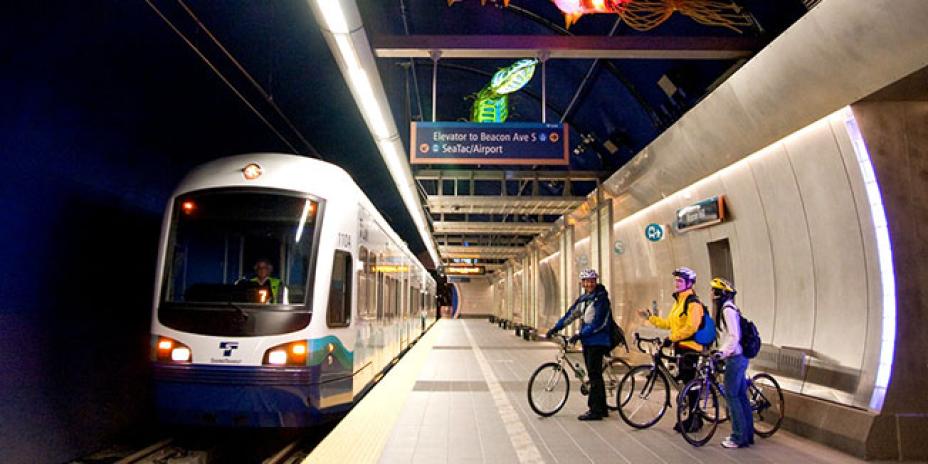
Transportation demand management (TDM) helps people use the transportation system more efficiently through education, incentives, products (like subsidized transit fare cards), and programs that encourage taking transit, carpooling, vanpooling, walking, biking, and teleworking.

TDM activities produce wide-ranging benefits to individuals and the transportation system - saving people time and money and reducing traffic congestion, vehicle emissions, and fuel consumption while supporting physical activity and enhanced safety. TDM activities make existing transportation investments perform better, extend the life of existing infrastructure, and can improve outcomes for new investments.
Commute Trip Reduction (CTR)
Washington State's Commute Trip Reduction (CTR) Law was passed in 1991 with the goals of improving air quality, reducing traffic congestion, and reducing the consumption of petroleum fuels through employer-based programs that encourage the use of alternatives to driving alone.
Local CTR Plans
Jurisdictions affected by the law are required to develop a local CTR plan and update it once every four years. These plans are designed to ensure that CTR program goals and targets help jurisdictions achieve their broader transportation and land use goals, and that the jurisdiction in turn develops services, regulations, policies, and programs that support the trip reduction investments of large employers. As the Regional Transportation Planning Organization (RTPO) for King, Kitsap, Pierce, and Snohomish counties, PSRC is required to review the plans of all CTR-affected jurisdictions in the region.
The most recent four-year local Commute Trip Reduction plans for all affected jurisdictions in the region are available on the statewide TDM webpage.
Regional CTR Plan
While PSRC is not a direct implementer of CTR, state law also requires Regional Transportation Planning Organizations (RTPOs) for CTR-affected areas to develop a regional CTR plan. PSRC worked with the 40 local jurisdictions implementing CTR in the region to combine their local 2025-2029 CTR plans into one regional CTR plan , which is included as a companion document to the Regional Transportation Plan (2026-2050). This regional plan only applies to CTR-affected worksites and reflects the goals set in the local plans.
TDM Planning at PSRC
Recognizing the importance of TDM in influencing travel behavior and encouraging mode shifts that support the Regional Growth Strategy, PSRC has consistently maintained a TDM work program for many years. This work program has and continues to be shaped by the priorities and direction of PSRC’s boards.
Local CTR and TDM programs are implemented by a variety of entities, including cities, counties, transit agencies, transportation management associations (TMAs), and non-profit organizations. PSRC’s role is to support these organizations by facilitating coordination between implementers, inviting implementers to inform the development of PSRC plans, and convening implementers and stakeholders to have broader regional discussions.
How can I engage in regional TDM work?
PSRC engages with TDM stakeholders around the region at key decision points in regional and local planning processes. This may be accomplished through email communications, information-sharing webinars, or meetings.
To receive updates on future TDM engagement opportunities, click Newsletter Sign-up in the purple bar at the bottom of this webpage and select “Transportation Demand Management (TDM)” as an interest.
Presentations and materials from regional TDM stakeholder meetings are posted to the website afterward. Past meeting materials are available at the link below.